
Agriculture at the Core of India’s Next Growth Phase
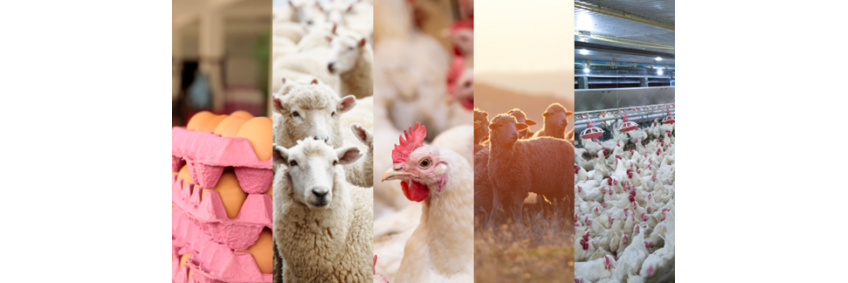
The Economic Survey tabled in Parliament places agriculture at the heart of India’s next growth phase, arguing that the sector’s future lies not just in producing more foodgrains, but in steadily moving up the value chain through livestock (including poultry), fisheries and horticulture.
As India pushes towards its Viksit Bharat goal, the Survey says agriculture will remain central to inclusive growth and improving rural livelihoods.
Indian agriculture, the Survey notes, has shown remarkable resilience in recent years, registering steady growth even amid climate volatility and global uncertainty.
Over the past five years, agriculture and allied activities have grown at an average annual rate of about 4.4% in real terms, among the strongest performances in decades. In the second quarter of FY26, the sector grew 3.5 per cent, reflecting stable momentum.
Crucially, much of this growth is now being driven by allied activities rather than traditional crops alone. The Survey highlights that the decadal growth rate of the agriculture and allied sector during FY16–FY25—at 4.45%, the highest compared with earlier decades—has been powered by strong expansion in livestock, including dairy and poultry, and fisheries. Livestock output grew at 7.1%, while fishing and aquaculture expanded at an even faster 8.8%, far outpacing crop-sector growth of 3.5%.
The transformation is particularly visible in livestock and poultry-based systems. Between FY15 and FY24, the sector’s gross value added rose by nearly 195% at current prices, recording a compound annual growth rate of close to 13%.
Fisheries, too, have emerged as a key income engine, with fish production rising by over 140% between 2014 and 2025, a sharp acceleration compared with the previous decade. Together, these allied sectors—including poultry—are increasingly shaping farm incomes and strengthening rural livelihoods.
Foodgrain production, meanwhile, continues to rise steadily. Output is estimated to have reached a record 3,577.3 lakh metric tonnes in agriculture year 2024–25, an increase of more than 250 lakh tonnes over the previous year. Higher production of rice, wheat, maize and coarse cereals, including millets or Shree Anna, has driven this growth, underscoring the sector’s ability to meet domestic food security needs.
Horticulture has emerged as one of the brightest spots in India’s agricultural story. Accounting for roughly one-third of agricultural GVA, horticulture production reached 36.2 crore tonnes in 2024–25, surpassing foodgrain output. Since 2013–14, horticulture production has risen sharply, reflecting a broad-based expansion across fruits, vegetables and other high-value crops.
India today is the world’s largest producer of dry onions, contributing about a quarter of global output, and ranks second globally in the production of fruits, vegetables and potatoes. These gains, the Survey says, highlight India’s growing role in global food markets and the vast potential of high-value crop production—alongside dairy and poultry—in raising farm incomes.
Looking ahead, the Survey underlines that agriculture’s future growth will increasingly come from diversification, value addition and allied activities rather than volume alone.
With dairy, poultry, fisheries and horticulture already making sizeable contributions to GDP, the sector is well-positioned to drive inclusive growth, create rural employment and anchor India’s broader development ambitions.
Complied by Poultry India media: Reference Dec-Jan: The Economic times