
Extending Egg Shelf Life During Low Market Rates
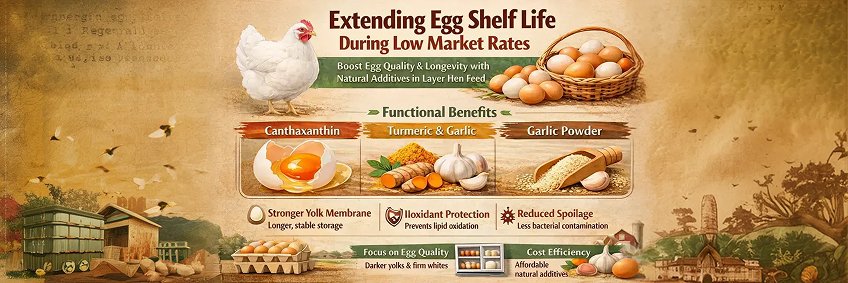
By feeding laying hens these specific, natural, and safe additives, eggs produced become inherently more resistant to spoilage, allowing producers to manage inventories better during low-price periods.
Functional Benefits for Long-Term Egg Storage
- Canthaxanthin: Acts as a powerful carotenoid antioxidant that strengthens the vitelline (yolk) membrane, allowing longer and more stable storage. It also enhances yolk pigmentation and visual appeal.
- Turmeric Oil / Powder (Curcumin): Functions as a natural antioxidant that protects egg lipids from oxidation, increases specific gravity, and helps maintain higher Haugh units even after 14 days of storage.
- Garlic Powder: Acts as a potent antioxidant and natural antibacterial agent. It improves gut health in layers, increases albumen height and Haugh unit during storage, especially under room-temperature conditions.
- Reduced Spoilage: The synergistic effect of turmeric and garlic provides antimicrobial protection, reducing contamination from pathogens such as E. coli.
- Maintenance of Internal Quality: Eggs retain a higher yolk index (less watery yolk) and better albumen height (firmer egg white) throughout storage.
- Economic Advantage: This approach enables cost-effective storage of eggs during periods of low market prices (e.g., summer), allowing producers to sell later when prices improve.
Management Tips for Low-Rate Periods
- Focus on Egg Quality over Quantity: During low-price phases, prioritize maintaining premium egg quality (darker yolk color and firmer albumen) using targeted feed supplementation.
- Storage Conditions: Although these additives extend shelf life, eggs should be stored in a cool, dry place—ideally below 25–30°C—to maximize effectiveness.
- Cost Efficiency: Natural additives such as turmeric, garlic, and canthaxanthin are often more affordable than synthetic alternatives, helping improve profitability when eggs are sold later.