
In fine feather: Recycled poultry waste rivals’ pashmina
Walk into the Golden Feathers stall at the Art Park in Goa and you could be knocked over with a feather when you learn what the soft-as-pashmina, pretty pastel stoles and shawls on display are made of — chicken feathers, collected from butchery waste. Golden Feathers is one of the first startups to be funded by the newly launched Brij Incubator, which looks for crafts-oriented sustainable enterprises and is being featured at the Serendipity Arts Festival.
Jaipur-based Golden Feathers, founded by Radhesh Agrahari, turns waste from butcheries into not just fabric but also paper and bags.
“I got the idea when I was doing my PG (post-graduation) at the Indian Institute of Crafts and Design,” says Agrahari, who is a textile engineer. He describes how one kg of broiler chicken has around 650 gm of edible parts and 350 gm of waste. “The waste from the industry is huge and clogs up landfills and rivers, so the idea was how to collect it and sanitise it and do something with it,” he explains.
Agrahari started his research in 2010, experimenting with natural processes to sanitise poultry waste and extract fibre. “We did not want to use any chemicals. Normally sulphuric acid is used in industrial waste treatment. But we found a process involving steam treatment and natural soaps. It is a 27-step process, after which the feathers are converted into yarn, paper and pulp,” he says.
Golden Feathers was set up in 2019, but it was only in 2021 that it started commercial operations.
CHEAPER, WARMER
At the company’s Jaipur factory, there is a waste segregation unit, and a feather processing plant. “There are four types of feathers — neck, wing, body and tail. The tail feathers are used for making fabric, while the body feathers we use to make commercial paper on which printing is possible,” says Agrahari. “Normal paper uses several kgs of wood, while ours is cellulose-free and does not require bleaching either,” he says. Unused feathers go into vermiculture.
In the last three years, Golden Feathers has recycled 500 tonnes of chicken butchery waste. Each year it upcycles 57,000 kg chicken feathers.
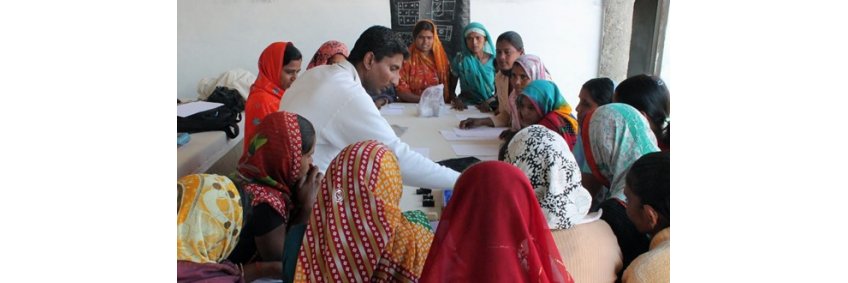
The eco-friendly products are cheaper too — where a pashmina shawl starts at ₹1 lakh, the feather shawl of GSM 110 is priced ₹10,000, and is warmer. Agrahari describes how they revived an ancient craft tradition of hand-spun fabric. Nearly 1,200 tribal women have been trained and employed.
Agrahari says the funding received from Brij Incubator — he declines to disclose the amount, only saying it is in crores — will be used to scale up the business. Already, the products are finding buyers in the US and Europe. “We will use the funding for marketing and global expansion,” he says, buoyed by the response the products have received at Lakme Fashion Week and Seoul Design Festival. “This is a future fabric and future paper,” sums up Agrahari, describing how the company has applied for carbon credits for its end-to-end solution to convert waste into eco-friendly products.
Sourced by Poultry India media