
COOP TO COMMERCE What started in farmyards now powers a ₹30,000 cr growth story in the state
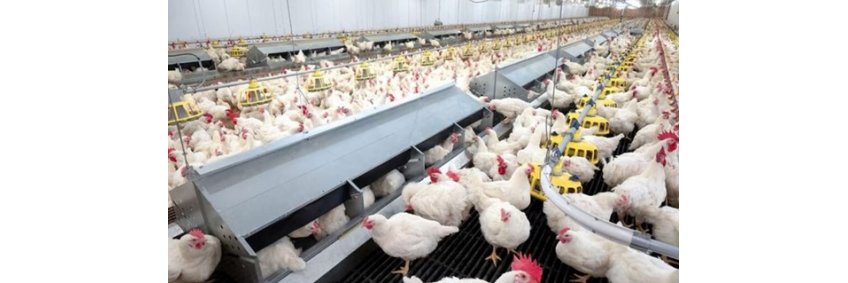
The state ranks first in meat production, contributing around 12 per cent of India’s total output, and fourth in egg production, accounting for more than 11 per cent of the country’s eggs. With an annual egg production growth rate of 18 per cent — well above the national average — the state leads the country in egg and chicken production. At present, the turnover of Bengal’s poultry industry is pegged at around Rs 30,000 crore annually, up from Rs 23,000–25,000 crore last year.
According to the poultry federation, the state produces nearly 140 per cent of its poultry meat requirement, with a 40 per cent surplus supplied to other states, reflecting strong inter-state market integration. Egg production is nearing self-sufficiency, supported by the rapid expansion of commercial layer farming.
Approximately 70 per cent of poultry consumption comes from rural areas, while 30 per cent is from urban and semi-urban markets, indicating broad-based demand across income groups.
Organised market monitoring mechanisms at block, district and state levels help stabilise prices and ensure fair returns for both farmers and consumers.
Bengal has witnessed rapid growth in integrated poultry farming, combining hatcheries, feed mills, commercial farms, processing and logistics. Around 500 poultry establishments operate across broiler, layer and breeder segments. Weekly broiler chick placement has crossed the 1.4 crore mark, with the sector recording double-digit annual growth, according to industry stakeholders.
Several integrated poultry companies operate in the state alongside independent farmers, ensuring supply chain efficiency, quality control and the adoption of scientific management practices. Poultry feed production in the state has surpassed internal requirements, strengthening input availability and cost stability.
Leading national and regional integrators, along with independent farmers, contribute to a resilient and scalable supply chain. Poultry feed production now exceeds state demand, ensuring input security and cost efficiency, according to Madan Mohan Roy, general secretary of West Bengal Poultry Federation and chairman and managing director of Maiti Poultries Pvt Ltd.
“With rising domestic demand, strong production fundamentals, improving biosecurity and increasing private investment, Bengal is steadily consolidating its position as a future-ready, export-capable poultry state. Innovative schemes such as broiler integration programs, mobile veterinary services, and buy-back arrangements have strengthened farmer confidence and ensured assured income opportunities in rural and semi-urban areas,” said Maiti.
Shalimar Group has been part of Bengal’s poultry industry for more than 50 years and is currently expanding its direct-to-consumer (D2C) brand Total. Specialised in poultry feed, breeding, hatching, broiler farming and processing, the poultry division of the diversified conglomerate has the capacity of four lakh birds and 40 lakh eggs per week. Sameer Agarwal, managing director, Shalimar Group of Companies said, “We have been operating across all verticals of the poultry industry nationally. We have integrated poultry operations from parent stock breeding and hatcheries to commercial broiler farms, including poultry processing and retailing under the brand Total. We are also selling poultry feed under the brand Sona. Our poultry feeds are prepared with quality raw materials, amino acids, vitamins, organic minerals and feed additives for maximum weight gain with improved feed conversion ratio and optimum egg production.”
With strong institutional backing, improving production capacity and rising consumer demand, West Bengal is well positioned to further strengthen its role as a leading poultry-producing state in India, thinks Partha Sur, managing director of Sur Feed Centre. He said, “We are very much hopeful about the growth of poultry in Bengal in the coming days. Rising consumption, improving supply chains, and expanding distribution networks are driving this momentum. We are focusing on skill development and manpower expansion of our feed and chicken production.”
Growth drivers for the poultry industry in the state include urbanisation, the introduction of new farming technologies and automation in feed production and hatcheries. In addition, consumption among those who were previously vegetarian has boosted demand in local markets.
“We remain committed to scaling up systematically, ensuring efficiency, quality, and cost optimisation at every level. With our strong legacy and deep understanding of poultry dynamics, we are confident of expanding our market share while maintaining uncompromising quality in chicks, feed, and broilers. A key focus area for us is strengthening our broiler integration model to meet the increasing demand for quality chicken in a growing market. Through operational excellence and strategic capacity enhancement, we aim to create long-term value for all stakeholders,” said Sumit Sureka, managing director of Shreehatch Agro India.
Hitech Group, an integrated poultry enterprise, is involved in breeder farming, hatcheries, feed plants, layer farms and commercial farming. Radheshyam Roy, founder and managing director of the company stated: “The poultry industry in the state is witnessing steady growth driven by rising protein demand, increasing health awareness, and improved affordability of poultry products. As consumers shift toward high-protein, low-fat diets, poultry consumption is expanding rapidly.”
“Modernisation is the key to sustainable growth. By integrating automation, digital monitoring and global best practices, we aim to improve productivity, reduce costs, and ensure superior quality standards. Our focus is not only on expansion but also on building a technologically advanced and environmentally sustainable poultry ecosystem in Bengal,” he added.
Highlighted Box:
- Bengal’s poultry industry is pegged at around ₹30,000 cr
- About 500 poultry establishments operate across broiler, layer, and breeder segments
- The state ranks first in meat production, contributing around 12% of India’s total meat output
- The state ranks fourth in egg production, accounting for more than 11% of the country’s egg production
Courtesy: Poultry world – February 2026